01
What are the northern lights and how do they form?
Solar particles hit Earth’s atmosphere and excite oxygen and nitrogen — often glowing green. Strong solar storms create bigger displays.
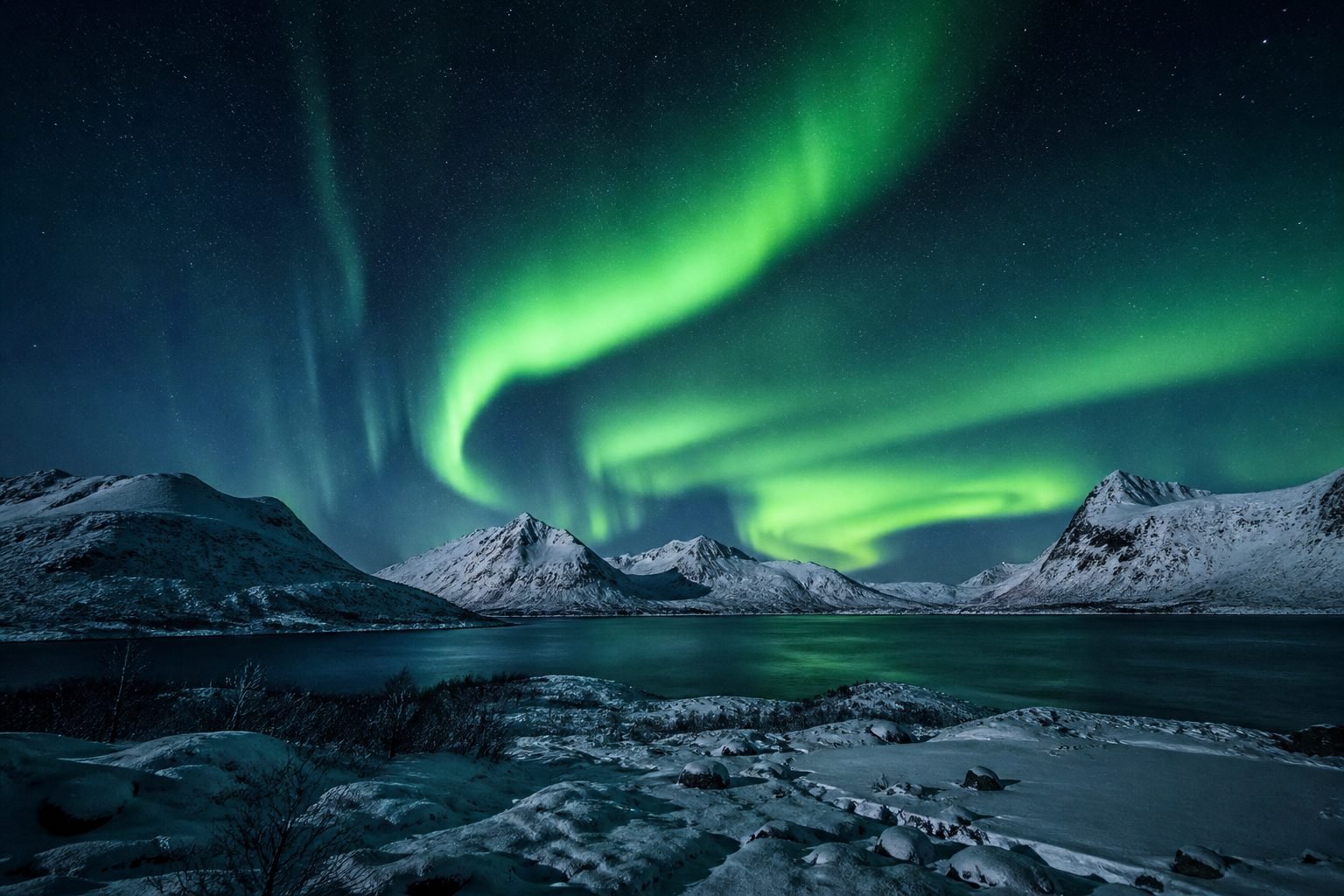
The northern lights (aurora borealis) shine brightest on clear, dark nights near the Arctic Circle — Iceland, Norway, Finland. Below: how they form, when to go, and how to photograph them.
Solar particles hit Earth’s atmosphere and excite oxygen and nitrogen — often glowing green. Strong solar storms create bigger displays.
Roughly September to March, when nights are long and dark. Equinox periods can be active. Avoid full moon for maximum contrast.
Strong odds in Iceland, northern Norway (Tromsø), and Swedish/Finnish Lapland. Farther north and darker skies help most.
Check the aurora forecast and Kp-index. Kp 4+ improves odds; clear skies are essential. Local forecasts help with timing.
Tripod, wide lens, high ISO, long exposure (often 5–15s), manual focus to infinity. Practice focus in daylight.
Pick tours that chase clear skies, not a fixed viewpoint. Small groups and experienced guides raise success rates.
Rarely — only during exceptional Kp events with clear skies in the north.
From minutes to hours, in waves. Activity can surge and fade the same night.
Yes — aurora australis is the southern counterpart.
Green mostly comes from oxygen at certain altitudes. Red and purple appear with other heights and gases.
Type any question on Focie Explains and get an instant interactive scrollytelling explain in one click.