Why leaves change color in autumn
NL
In-Depth Exploration

Why leaves change color in autumn

Every autumn, green forests transform into brilliant shades of yellow, gold, and red. How does chlorophyll breakdown and temperature trigger this natural phenomenon? Explore the visual explanation below.

01

What causes autumn leaves to change color?

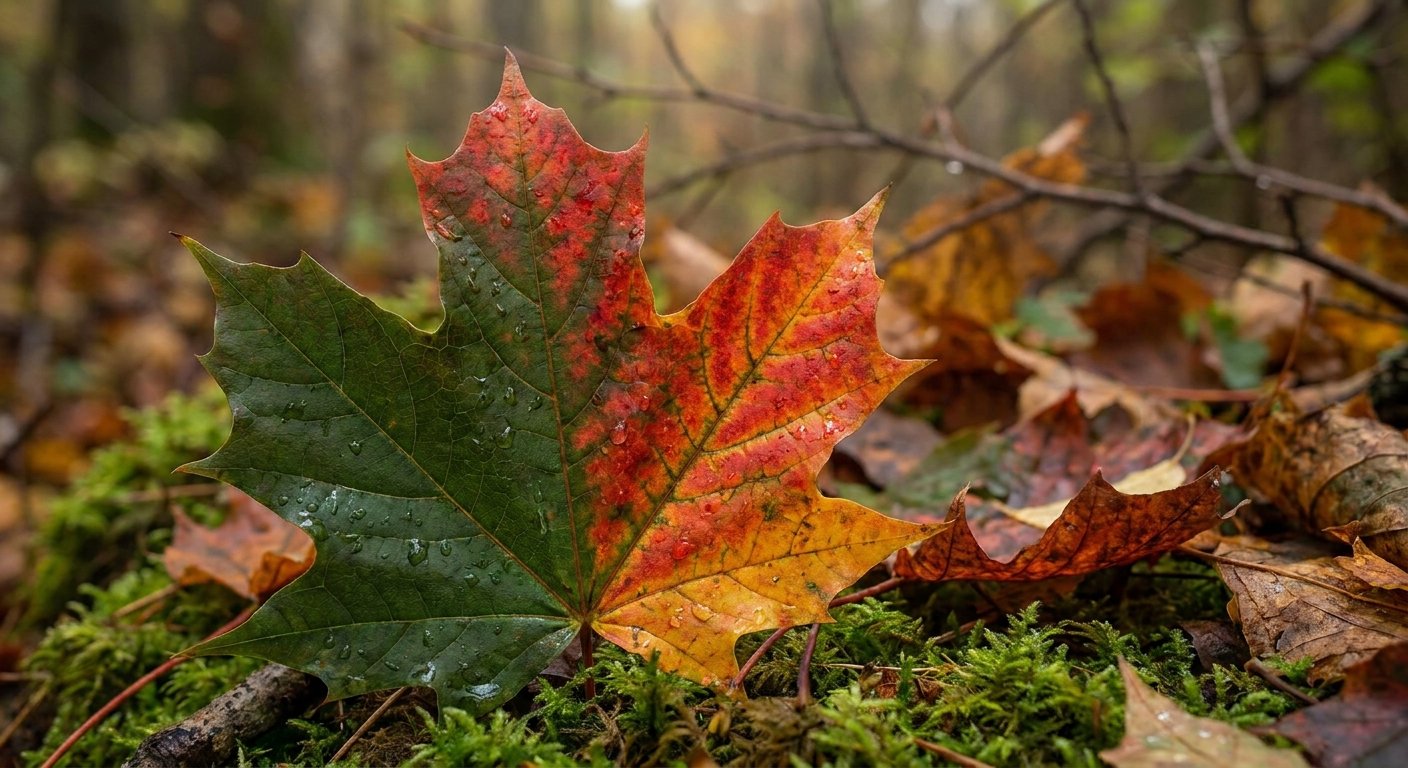
During spring and summer, green chlorophyll dominates leaf color as trees produce food from sunlight. As daylight decreases and temperatures cool, trees halt chlorophyll production and break down existing green pigments.

What causes autumn leaves to change color?
02

Which pigments create yellows, oranges, and reds?

Carotenoids (yellow and orange) are present all season but masked by green chlorophyll. Anthocyanins (vibrant red and purple) are newly synthesized in autumn when sunny days combine with crisp, cool nights.

03

Why do deciduous trees shed their leaves?

Leaves lose moisture quickly through evaporation. In freezing winter soils, roots struggle to absorb water. To survive drought and frost, trees form a corky abscission layer at the stem and release their leaves.

04

Why do evergreen trees stay green all year?

Conifers and evergreens have narrow needle leaves protected by a thick waxy coating and natural resin antifreezes, minimizing winter water loss without shedding.

05

How does weather impact autumn foliage brilliance?

A sequence of warm, sunny autumn days followed by cool, frost-free nights produces the richest crimson and gold displays by maximizing sugar trapping and anthocyanin creation.

06

What happens to fallen leaves on the forest floor?

Fallen leaves create a vital insulating mulch layer that nourishes earthworms, fungi, and beneficial microbes, recycling organic nutrients back into the soil for spring regrowth.

Questions & Answers

Frequently Asked Questions

What is chlorophyll?

Chlorophyll is the green pigment in plants responsible for photosynthesis — converting sunlight, carbon dioxide, and water into sugars and oxygen.

Why do certain trees turn color earlier than others?

Different tree species possess unique genetic sensitivities to changing photoperiods (day length) and night temperatures.

When is peak autumn foliage season?

Peak foliage usually occurs between mid-October and early November across temperate zones, influenced by seasonal rainfall and sun.

What is the difference between carotenoids and anthocyanins?

Carotenoids exist in leaves all year providing yellow/orange tones; anthocyanins are produced specifically in autumn giving vivid red/purple shades.

✨ Create Your Own In 1 Click

Want a visual answer on your own topic?

Type any question on Focie Explains and get an instant interactive scrollytelling explain in one click.